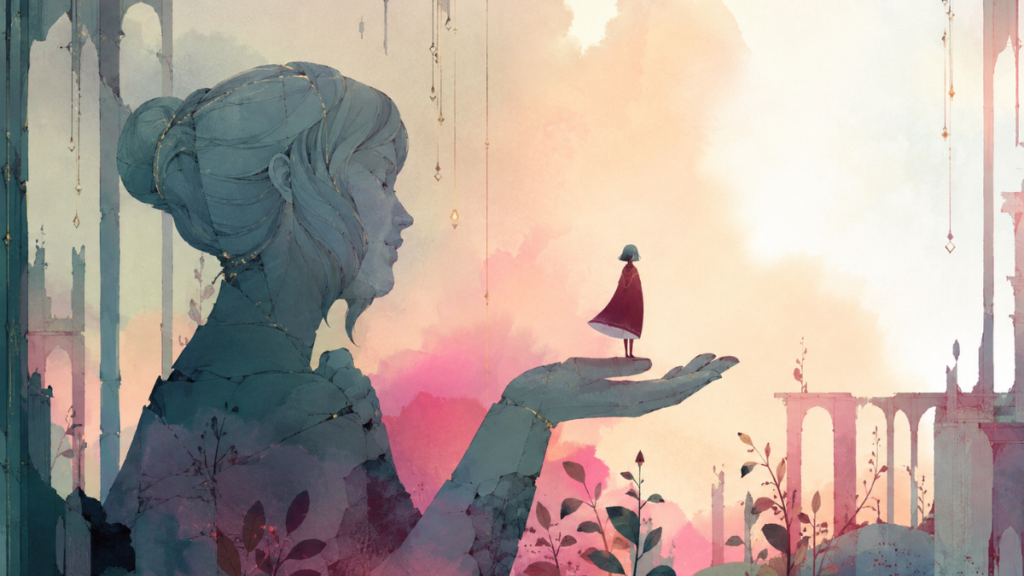
Have you ever felt like a video game was holding you? Not the adrenaline rush of winning a multiplayer match or the tension of a frantic boss fight. I mean that strange, warm, deeply human feeling of being inside a moving piece of art. That’s GRIS.
A few days ago I was sitting on the couch with a lukewarm cup of tea, thinking about how certain games manage to cut right through you without ever firing a single bullet. I was remembering the first time I played GRIS.
I remember how my chest tightened with the first piano notes, and how, without even realizing it, I went from the most absolute gray to an explosion of color that gave me my breath back.
I know you feel this too. If you’re here, it’s because you’re looking for more than quick entertainment. You’re looking for a safe space. Stories that stick with you for days, worlds that invite you to slow down, and mechanics that flow naturally, at your own pace, following your own instincts.
That’s why today I want to share a very special list where GRIS sits at the very top. We’re going to dig deep into every corner of its world, then connect it to five other games that share the same visual and emotional sensitivity. Get comfortable, settle in, because we’re diving into stories where the real adventure is learning how to feel.
This post contains affiliate links. See disclosure for details.
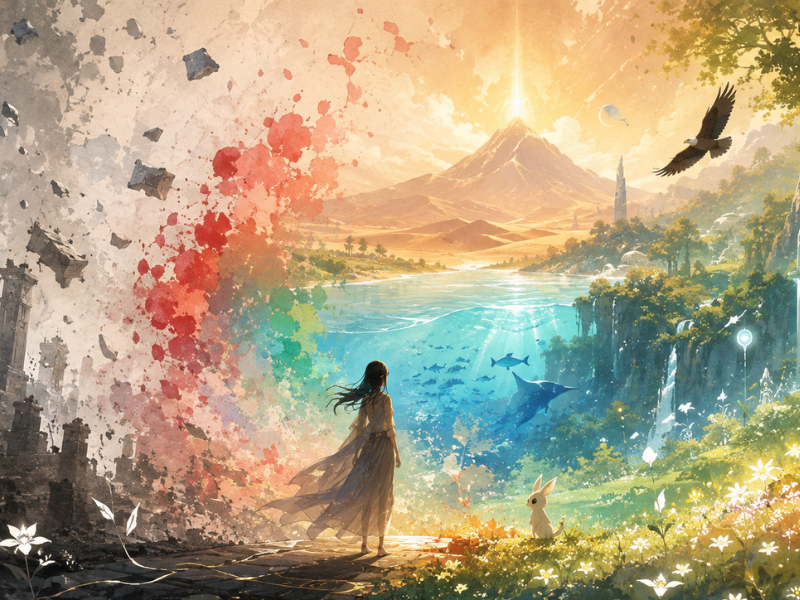
Image generated for illustrative purposes using AI
GRIS: Nomada Studio’s masterpiece and a journey through grief
If there’s one game that fully embodies the idea of a video game as an emotional experience, it’s GRIS. Released in 2018 by Barcelona-based Nomada Studio, with the unmistakable, gorgeous art style of painter and illustrator Conrad Roset, this game became an overnight global benchmark. It proved that color, shape, and music can say more than a thousand lines of scripted dialogue.
When we take control of Gris, the protagonist, we’re dropped into a situation that’s as devastating as it is deeply human. The story starts abruptly: Gris is standing on the palm of a massive, crumbling statue. It collapses. She tries to sing, to hold things together, but her voice breaks. She loses the ability to make a sound, and the world around her loses all color. Everything turns monochrome, harsh, heavy, and gray. The only real obstacle we face is our own inner pain and the need to rebuild the broken pieces of our world.
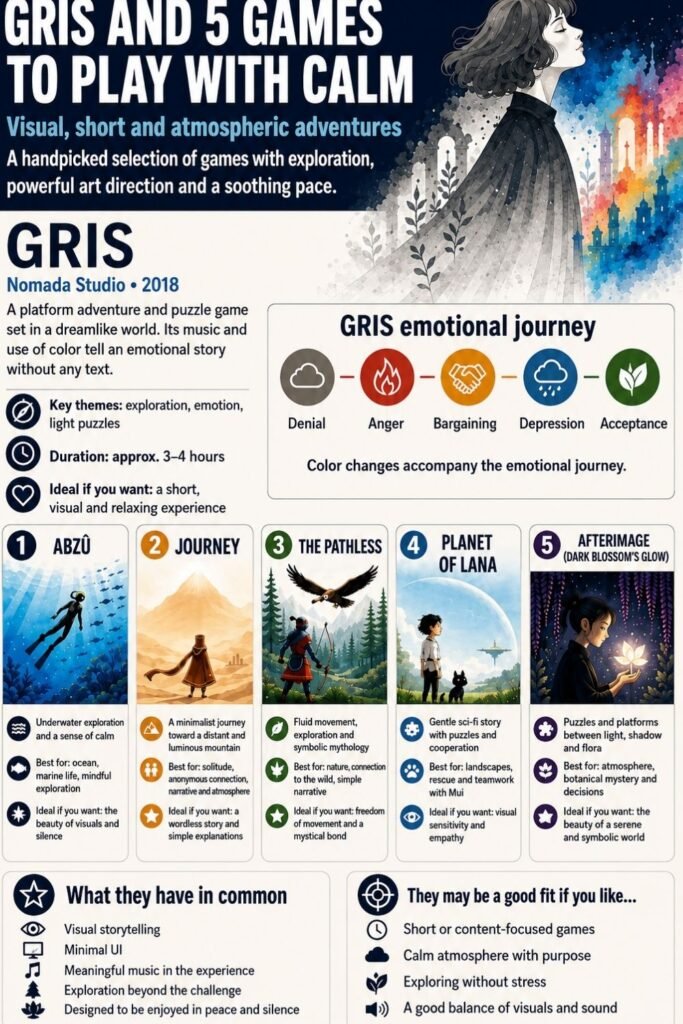
What makes GRIS truly remarkable is how it translates the stages of grief into level design and color palette. As we progress, we explore five main hues that represent the emotional states we go through after a deep loss, a trauma, or a life-shattering moment: denial, anger, bargaining, depression, and finally, acceptance.
The initial red speaks to bottled-up fury and the crushing weight of rage. In this phase, Gris gains the ability to turn into a heavy stone block that can shatter the ground and force her way through, symbolizing how anger makes us rigid and blunt in the face of suffering.
Then we transition into green, a color that brings back nature, vegetation, and organic growth after the emotional storm. Here Gris’s dress transforms to let us glide and soar, finding a moment of relief in the middle of the chaos.
Blue brings the deepest sadness, the vastness of water, and the need to cry in order to cleanse the soul. This section plays with the fluidity of swimming, reminding us that tears aren’t a weakness but a necessary release to keep moving forward.
Finally, yellow gives us light, recovered joy, and the ability to sing again. Every jump, every graceful movement, every subtly solved puzzle is part of a visual language that needs no translation.
Playing GRIS is an exercise in active contemplation and personal catharsis. I remember spending entire minutes just watching the fabric of the protagonist’s skirt sway in the breeze, or how the watercolor backgrounds seemed to come alive with every step. The soundtrack, masterfully composed by Berlinist, matches every beat with a disarming sensitivity, moving from lonely piano melodies to vocal crescendos that give you chills.
It’s a short experience, yes, but it stays with you for weeks. It’s a constant reminder that it’s okay to break, that pain is an unavoidable part of the path, and that beauty, sooner or later, always finds a way to bloom among the ruins.
Available on PC (Windows, macOS), Nintendo Switch, iOS, Android, PlayStation 4, PlayStation 5, Xbox One, and Xbox Series X/S.
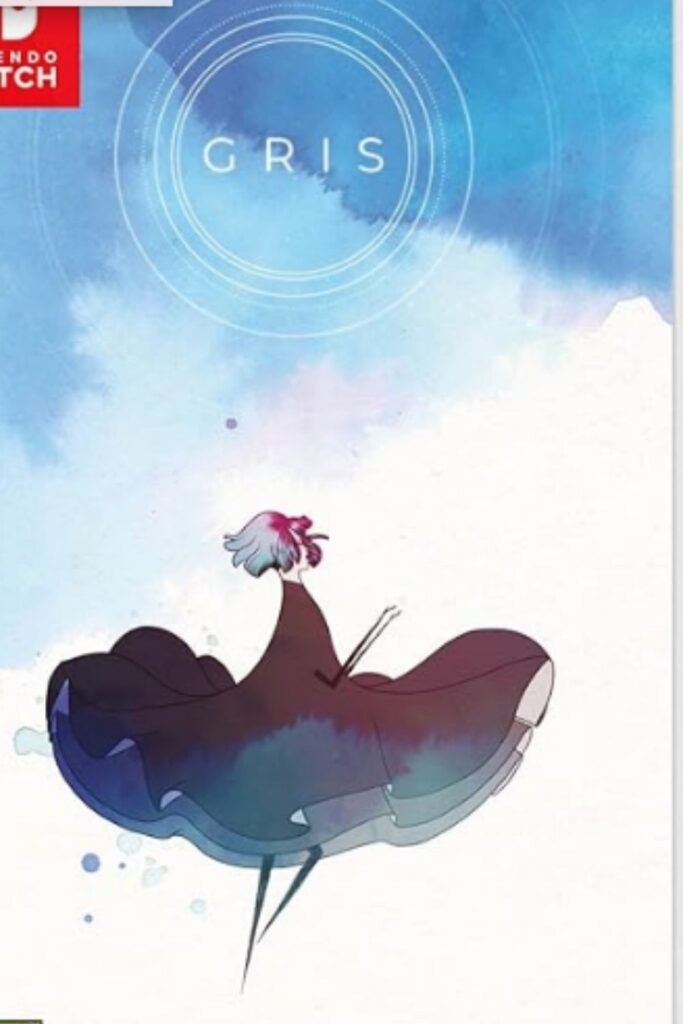
Game cover art
5 more games like GRIS
Abzû: A silent descent into the ocean’s deepest secrets
Picking up right where the emotional intensity of GRIS leaves off, Abzû is the perfect next step.
Developed by Giant Squid under the artistic direction of Matt Nava (who already left his unmistakable visual mark on other modern classics), this game takes us deep underwater with no greater ambition than to let us marvel at the vastness of the blue and the life that fills it.
From the very first second we glide beneath the surface, Abzû establishes a quiet trust. We’re a lone diver in a vibrant ecosystem, surrounded by hundreds of marine species that swim around us, react to our presence, and let us interact with them in subtle, beautiful ways.
One of the things I love most about this game is how it handles free exploration. You can drift with the currents, grab onto the fin of a giant sea turtle for a ride, or sit and meditate on ancient statues on the ocean floor, watching the wildlife from the perspective of the fish themselves.
Every dive reveals forgotten ruins of an ancient civilization that lived in harmony with the sea, connecting nature and technology in a way that feels organic and breathtaking.
The music by Austin Wintory deserves its own spotlight because it functions as the game’s actual heartbeat. Harp and orchestral melodies rise and fall with your movement, turning a simple swim around a coral reef into something almost meditative.
Abzû is a constant reminder of how fragile and beautiful our own oceans are. It makes you fall in love with marine life through firsthand experience and leaves you with a deep sense of mental lightness.
Available on PlayStation 4, Windows (Steam and Epic Games Store), Xbox One, and Nintendo Switch.
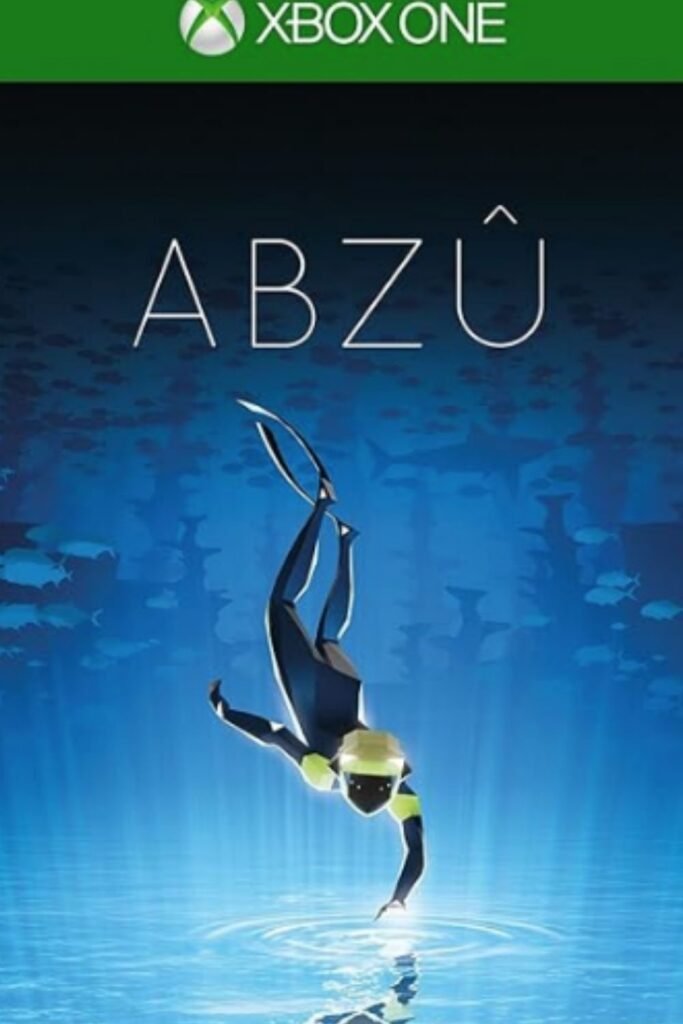
Game cover art
Journey: A shared walk toward the mountaintop
You can’t talk about games that touch your soul without stopping at Journey. Made by Thatgamecompany, this title is, without question, one of the creative high points of modern gaming. Its premise is as simple on paper as it is transformative in practice.
You appear out of nowhere in the middle of a vast, scorching desert. Far off on the horizon, a towering mountain glows with a steady, mysterious light. That’s your only beacon, your only goal.
You don’t know who you are, you don’t know how you got there, and you can’t speak or communicate through text. Your only form of expression is a melodic chime that calls out to companions, activates magical fabrics that let you glide through the air, and brings small fragments of a time-frozen world back to life.
What truly sets Journey apart is its anonymous, silent multiplayer system. As you move across the dunes, you’ll likely cross paths with another player walking the exact same road. No usernames floating above their head. No voice chat. Just two masked souls in red cloaks who decide to walk together through the immensity of the desert and the frozen ruins.
When the game ends and the real names of the people you’ve shared the journey with appear on screen, it’s hard not to feel a lump in your throat. The realization of how much empathy can be shared without a single word is something that stays with you.
Available on PlayStation 4, Windows (Steam).
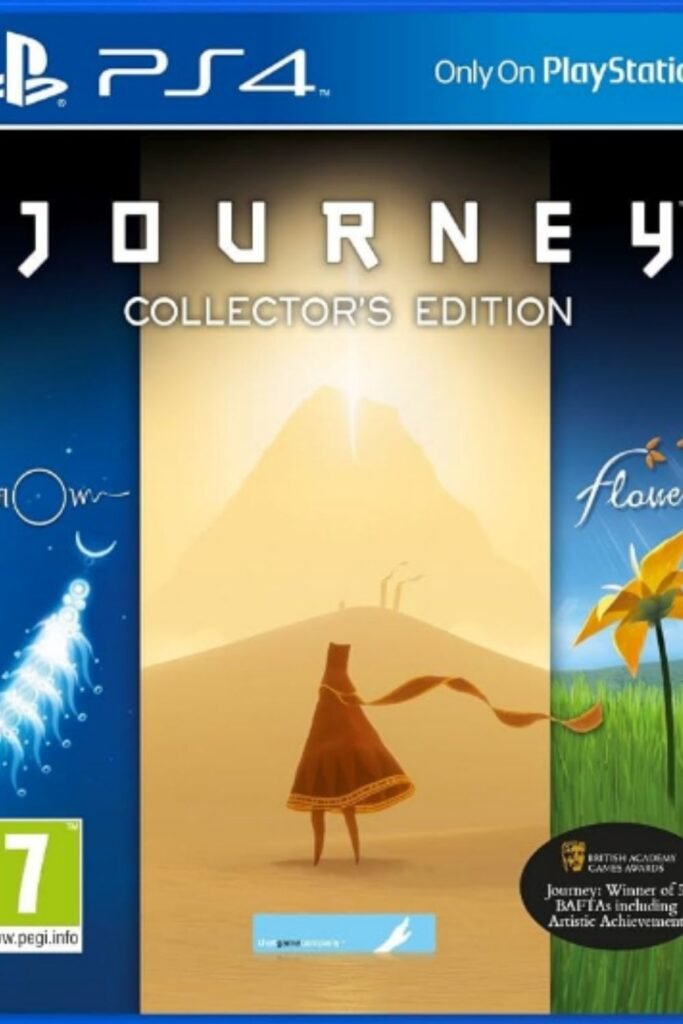
Game cover art
The Pathless: Fluid movement, speed, and mythology in wild lands
If you want to keep that feeling of mystical connection with nature but add more dynamism and open-world exploration, The Pathless is a fantastic pick.
Also created by Giant Squid, this game drops us into a forested archipelago under an ancient curse that we need to purify alongside our inseparable companion: a gorgeous golden eagle.
The pacing shifts a bit here compared to GRIS or Journey. The atmosphere is still contemplative and rich with archaeological mystery, but the core mechanic revolves around fluid, constant movement.
Our hunter sprints at high speed across plains, dense forests, and snowy mountains, shooting arrows at floating talismans scattered across the landscape. Every clean hit propels you forward, creating a rush of speed and momentum that’s both addictive and freeing.
The relationship with the eagle is the beating heart of the experience. At first, the bird is cautious and distant, but as you explore together, solve environmental puzzles, and gently groom her at altars, the bond between you grows organically.
She lets you take flight, glide over deep canyons, and reach otherwise inaccessible places, turning exploration into a coordinated dance between ground and sky.
Available on PlayStation 4, Windows (Steam and Epic Games Store), Xbox One, and Nintendo Switch.
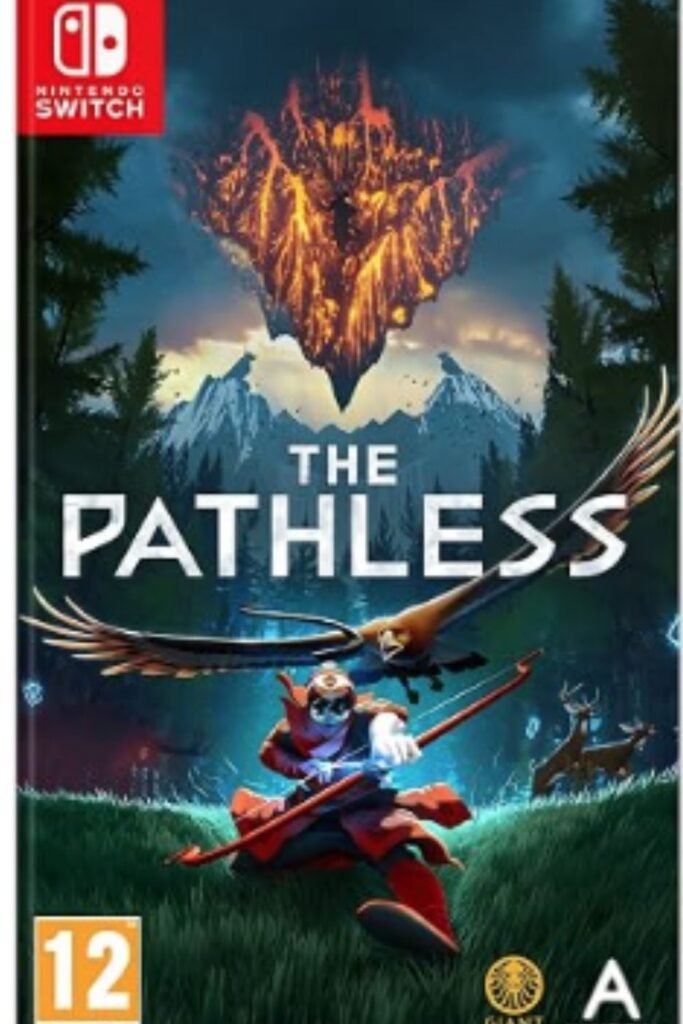
Game cover art
Planet of Lana: A cinematic sci-fi adventure full of heart
Continuing through these visually stunning worlds, we arrive at Planet of Lana, a game that blends quiet visual storytelling with platforming and puzzles set in a naturalistic sci-fi world that’s genuinely captivating.
From the very beginning, the game introduces an idyllic, peaceful planet where humanity lives in perfect harmony with nature and strange native creatures.
That peace shatters when an unknown robotic invasion storms the settlement, capturing its people, including the protagonist Lana’s sister.
What follows is a rescue journey across landscapes that range from lush forests to deserts and alien industrial complexes.
The beauty of Planet of Lana lies in how it builds gameplay around cooperation. Early in the adventure, we meet Mui, a small, furry, adorable creature we rescue who becomes our inseparable companion.
Through simple commands, we can ask Mui to distract enemies, activate distant mechanisms, or help us past obstacles Lana couldn’t handle alone.
The atmosphere is polished down to the smallest detail, with art direction reminiscent of the best traditionally animated films and an orchestral score by Takeshi Furukawa that elevates every moment of tension and tenderness.
It’s a reminder that even in the coldest technological invasion, empathy and the bond between different species can make all the difference.
Available on Windows (Steam), Xbox One, Xbox Series X/S, Nintendo Switch, PlayStation 4, PlayStation 5, Android, and iOS.
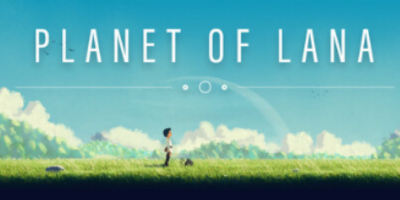
Image: Steam
Oscuro Blossom’s Glow: Hidden beauty, subtle mystery, and botanical wonder
To close out this lineup of games that reach straight into your soul, we need to talk about Oscuro Blossom’s Glow, a 2D puzzle-platformer developed by Hongoneon and published by Scout Game Studios that launched in August 2025 on PlayStation 5, PlayStation 4, and PC.
While it operates on a more intimate scale than heavyweights like GRIS or Journey, this game stands out for its masterful use of light and darkness within a hand-drawn visual world that feels like it was pulled straight from a storybook.
You play as Selene, a young girl born from the radiant flowers that sustain a network of planets rooted in an ancient, colossal tree. When an entity known as the Oscuro steals the light from that primordial tree, Selene sets off on a journey through supernatural landscapes to chase it down and restore balance.
Her main ability is absorbing and releasing light from mystical flowers to activate mechanisms, illuminate hidden paths, raise platforms, and reshape the environment as she goes.
Every use of light changes the scene in surprising ways: plants bloom into staircases, obstacles dissolve, and new paths reveal themselves.
What sets Oscuro Blossom’s Glow apart from a purely contemplative experience is that it pairs that serene atmosphere with moments that demand quick thinking and sharp reflexes. Some puzzles ask you to figure out which flowers to light up and which to leave in shadow, while platforming sections require precise jumps and fast direction changes.
There are even boss fights against the Oscuro itself, where you have to solve puzzles while dodging under time pressure.
Along the way, you encounter creatures that can be allies or enemies, and the choices you make determine the fate of the entire planetary system, leading to multiple endings.
The art direction, with its textured tones and enchanted flora, wraps every level in a visual warmth that makes you want to stop and take in every detail. The ambient music and whispers of nocturnal life create a stillness that contrasts beautifully with the challenges ahead.
It’s a hidden gem for anyone looking for a game that combines the aesthetic delicacy of the titles above with gameplay that asks for a bit more active involvement. A reminder that light always finds a way through the dark.
Available on PlayStation 5, PlayStation 4, and PC via Steam.
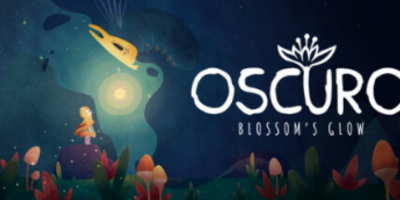
Image: Steam
Infographic generated using AI
Common questions about GRIS and similar games
Why is GRIS considered such an important game?
GRIS explores the stages of grief and personal growth without relying on text or dialogue. It lets each player project their own experiences onto the protagonist’s visual and sonic journey, creating a deep psychological connection.
Do you need a lot of gaming skill to play these kinds of games?
Not at all. Games like GRIS, Abzû, and Journey are designed to prioritize emotional experience and free exploration over mechanical difficulty, making them accessible to anyone, regardless of prior gaming experience.
What do all these games have in common besides the visuals?
They all share minimalist environmental storytelling, a near-total absence of intrusive on-screen UI, and a strong atmospheric quality where the music and art direction serve as the true driving forces of the narrative.
How long does it take to finish GRIS?
GRIS takes about 3 to 4 hours to complete, a focused format that lets you experience the whole thing in a single sitting without diluting its emotional impact.
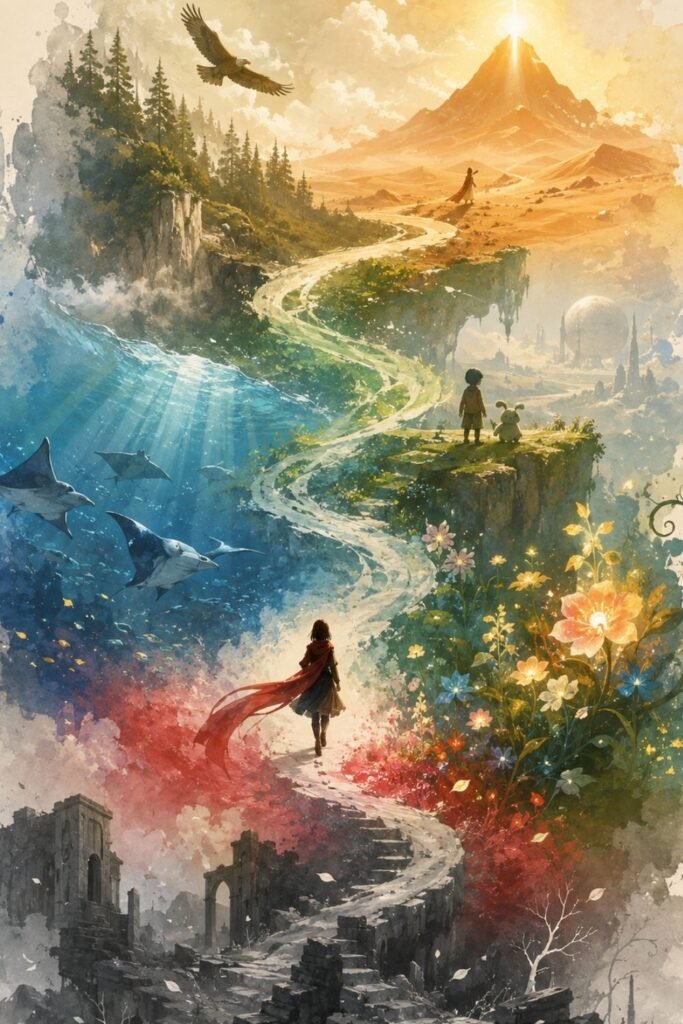
Image generated for illustrative purposes using AI
Video games are so much more than quick distractions or skill challenges. They can become safe havens for your hardest days. Games like GRIS, Abzû, Journey, The Pathless, Planet of Lana, and Oscuro Blossom’s Glow prove that interactive media has a unique ability to make us feel, reflect, and somehow to heal.
I’d love to hear from you. Drop a comment below and tell me which of these worlds resonated with you the most, or if you’ve already walked with Gris on that path from pain to light. I’ll be reading every one!